
Oil Painting Techniques For Beginners and Pros
Painting with oils has a rich history in the art world. Countless brilliant artists have used this medium to create their masterpieces, and it continues to be widely loved today. Whether you’ve considered trying your hand at painting or you’re a pro seeking a change, chances are you’ve thought about using oils.
Acrylic and oil paints, beloved by contemporary artists, possess distinct qualities. The dissimilarity lies in their composition. Oil paints contain pigments suspended in oil, often linseed, while acrylics employ acrylic polymer emulsion to bind colors. Acrylics can be diluted with water, but oil paints necessitate delicate handling, requiring turpentine or mineral spirits for thinning or brush cleaning.
I understand that maintaining oil paints can be overwhelming, but please don’t let that discourage you. Artists still use them for a reason – the pigments produce a rich tone and a beautiful lustrous finish. Moreover, oil paints dry slowly, giving you ample time to make changes to your artwork after the initial brushstroke.
Oil painting supplies
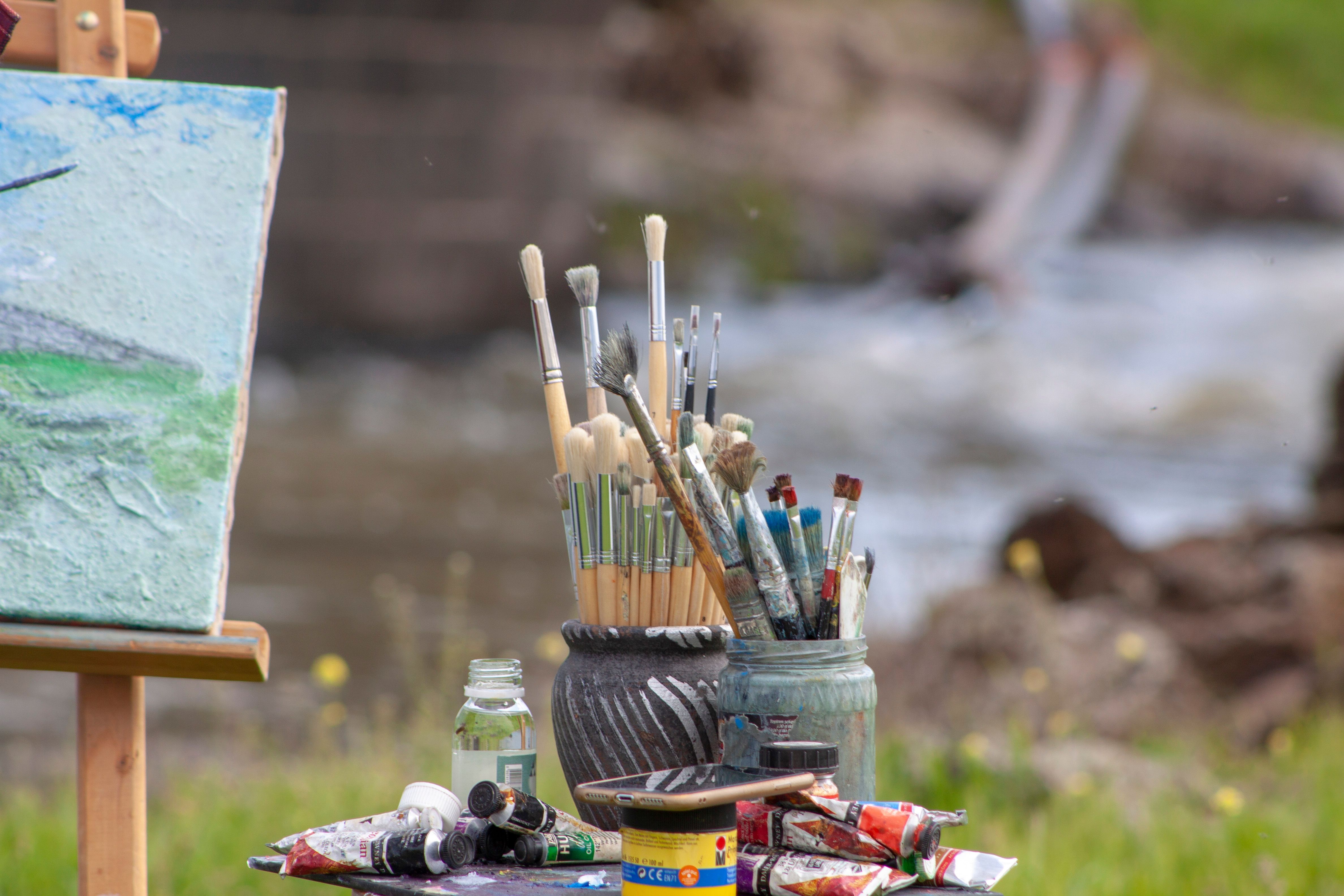
Before you embark on your oil painting journey, it’s important to gather the necessary supplies. You may already possess some if you’ve worked with acrylic or watercolors. However, it’s advisable to have a separate set of tools solely for oil-based paints, as water and oil simply don’t mix!
Oil painting techniques
Glazing
Glazing is a delicate process of applying a thin layer of paint to create a unique and complex color. Each layer adds depth and character to the surface, resulting in a beautiful and intricate finish.
To achieve a thinner consistency in your oil paint, consider using turpentine or a similar solvent. Alternatively, opt for linseed oil to enhance the shine of your pigment, unlike turpentine which may result in a lackluster color.
Underpainting
We all know how overwhelming it can be to face a blank canvas. That’s why underpainting is so helpful. It’s the foundation for your artwork, guiding you as you add depth and tone to your masterpiece.
When beginning with an underpainting, it’s important to delicately thin your paint. Then, using a single color in varying shades, gently apply loose strokes to outline the main elements of your artwork. For instance, in a sunset painting, you can block out the darker areas where trees and hills will be, contrasting with the sky. This technique ensures that when you finally apply the paint to the canvas, you’ll have a clear understanding of where each stroke should be placed.
Wet on wet
Painting can involve a lot of waiting, as each layer of paint needs to dry before applying the next. However, with the wet-on-wet technique, you can break free from this waiting game. Also known as alla prima, this style allows you to apply wet paint onto wet paint on the canvas. Artists like Monet and Van Gogh embraced this approach, which enables you to work swiftly and blend layers directly on the canvas. This technique is particularly advantageous for landscape painting, as it allows you to complete the artwork in a single session.
Oil painting, with its extended drying times, allows for the perfect opportunity to experiment with wet-on-wet techniques.
Palette Knife
Consider exploring the palette knife not only for mixing paint but also as a means to delicately apply pigment onto your canvas. Its unique shape allows for textural strokes and abstract imagery, enhancing your artistic expression.
Impasto
Have you ever taken a moment to appreciate the beauty of Van Gogh‘s paintings? Notice how each stroke is visible and the paint stands out? You can replicate this by applying thick layers of paint with a brush. Don’t be afraid to mix colors on canvas.
Grisaille
Grisaille, a technique from the early Renaissance, beautifully imitates sculpture with its gray tones. It was favored for its affordability. Nowadays, this monochromatic style evokes the nostalgic charm of black-and-white photography rather than sculpture.
Blocking In
When starting a painting, blocking in is like creating a foundation. By using thinned paint and a large brush, you can apply the basic colors and shapes to your canvas. This helps you plan the painting and make sure everything works together. You can then add more color and details or leave some of the blocked-in painting visible to capture the initial energy of your work.
Chiaroscuro
Chiaroscuro, a beautiful Italian term meaning “light dark,” captures the delicate harmony of light and shadow in art. Originating in the Renaissance, it is closely linked to oil painting. Artists like Caravaggio and Rembrandt skillfully employed this technique, creating breathtaking masterpieces. Their works possess a mesmerizing interplay of darkness and illumination as if their subjects were gracefully illuminated in a dimly lit chamber. This remarkable effect breathes life into their creations, endowing them with a captivating three-dimensional quality.
Figurative oil paintings often embrace this principle, as chiaroscuro is employed to create a striking interplay of darkness and light. Describing a painting as such indicates a remarkable contrast that captivates the viewer.